


You may also like
-
Dracula Poster
Unknown artist · 1931 · Dramatic horror poster with looming cloaked vampire silhouette against a bright full moon
Plakat od 40,50 zł · W ramce od 72 zł
Cena regularna Od 27,00 złCena regularna -
The Revenge of Tarzan Poster
Unknown artist · 1920 · Classic jungle adventure poster of Tarzan wrestling a lion beneath bold title lettering
Plakat od 40,50 zł · W ramce od 72 zł
Cena regularna Od 27,00 złCena regularna -
A Daughter of Destiny Poster
Eric Rohman · 1928 · Art Deco movie poster with a poised woman in a radiant yellow dress
Plakat od 40,50 zł · W ramce od 72 zł
Cena regularna Od 27,00 złCena regularna -
King Kong Poster
Boye · 1933 · Dramatic King Kong poster with piercing red eyes and a heroine in vivid red
Plakat od 40,50 zł · W ramce od 72 zł
Cena regularna Od 27,00 złCena regularna


-

'Bardzo ładne plakaty. Jakość jest świetna i dostaliśmy je naprawdę szybko!'
-

'Sklep, do którego naprawdę warto zajrzeć. Ogromny wybór plakatów. Spędziliśmy tam ponad godzinę!'
-

'Świetne miejsce na prezent. Ceny są naprawdę dobre, a na miejscu mogą też wszystko oprawić i zapakować.'
About the Artist
H.C. Miner was a prominent figure in early 20th-century American lithography, a time when posters were the leading medium for mass communication and public spectacle. His studio specialized in theatrical and film promotion, capturing the excitement and drama of live events and cinematic releases. Miner's work contributed to the visual language that defined how audiences anticipated and experienced entertainment in bustling urban centers.
Through his posters, Miner helped shape the aesthetics of advertising, blending artistry with commercial appeal. His legacy endures in the world of collectible graphic art, where his bold designs remain influential among enthusiasts of vintage visual culture and early cinema history.
The Artwork
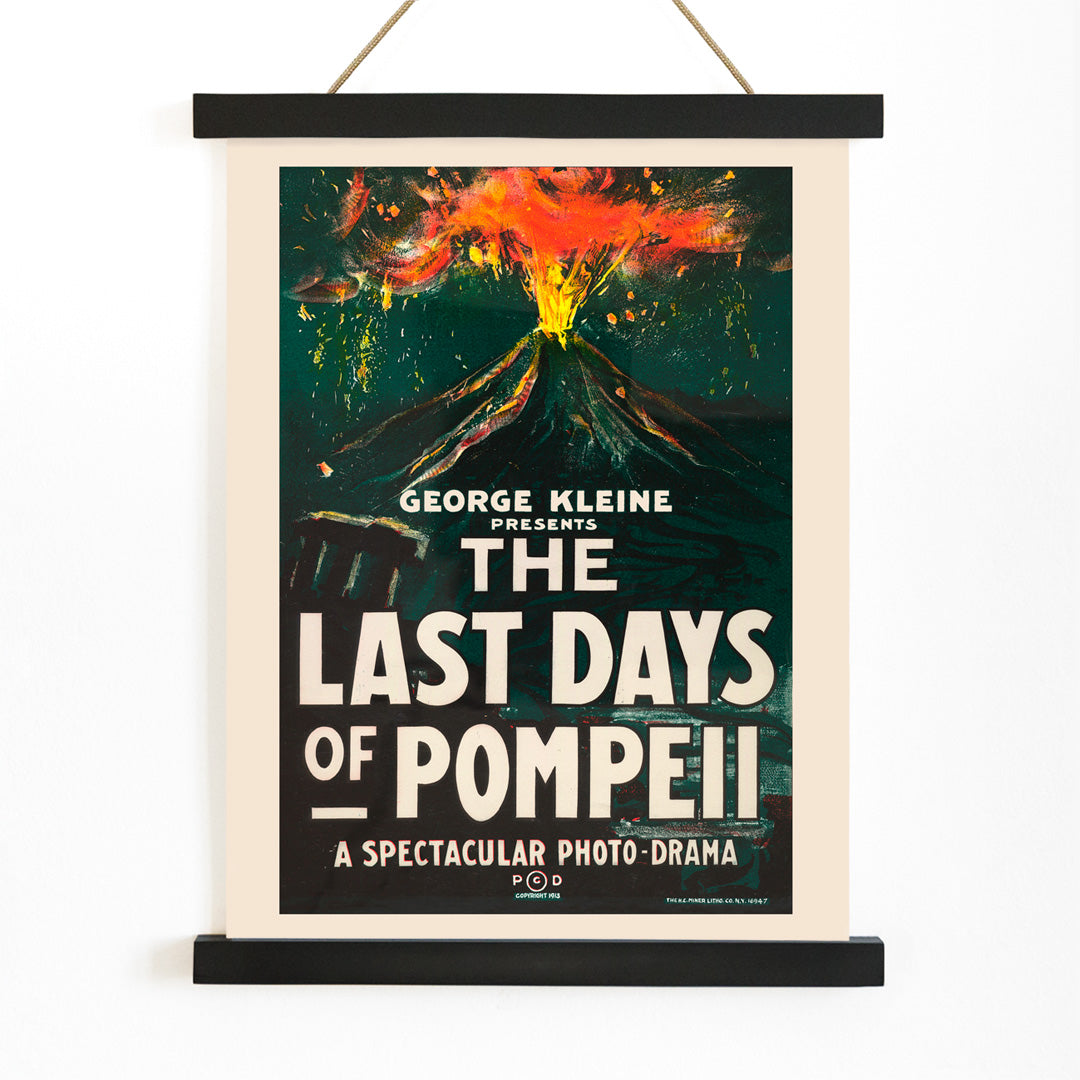
The Last Days of Pompeii poster was created in 1913 to promote a dramatic retelling of the catastrophic eruption of Mount Vesuvius in 79 CE. This event, long embedded in Western imagination, offered filmmakers and promoters a narrative rich in spectacle, moral lessons, and historical fascination. The poster was designed to attract audiences with the promise of thrilling disaster and the grandeur of ancient Rome brought to life on screen.
As a piece of advertising, it reflects the era's fascination with archaeology and epic storytelling, serving both as a marketing tool and as a visual artifact of early cinematic culture. Today, it is valued by collectors of classic film posters and vintage advertising art for its historical resonance and graphic impact.
Style & Characteristics
The composition centers on the explosive force of the volcano, with billowing smoke and fiery orange and yellow hues dominating the upper half of the image. Below, silhouetted figures and architectural elements evoke the chaos and urgency of the moment. The bold, vintage typography of the title commands attention, anchoring the scene and amplifying the drama.
The color palette features deep blacks and greens contrasted with vivid orange and yellow, heightening the sense of danger and movement. Flat lithographic color fields and strong outlines ensure clarity from a distance, while the overall mood is cinematic and intense, characteristic of early 20th-century promotional art.
In Interior Design
This vintage poster makes a striking focal point in a media room, study, or living space where narrative energy is desired. It pairs well with other vertical posters, photographs, or classic art pieces, creating a gallery wall that balances history with graphic dynamism.
Complement the artwork with charcoal, olive, and warm neutral tones, and highlight the orange and yellow accents through brass or amber accessories. Its bold presence suits industrial, mid-century, or eclectic interiors, and it is especially appealing to film enthusiasts seeking authentic period character in their decor.