


You may also like
-
Cocos Schizophylla Poster
Carl Friedrich Philipp von Martius · 1823 · Detailed botanical print of a palm specimen with fronds and fruit
Plakat od 40,50 zł · W ramce od 72 zł
Cena regularna Od 27,00 złCena regularna -
Astrocaryum Vulgare Poster
Carl Friedrich Philipp von Martius · 1823 · Detailed palm botanical print with specimen studies on warm beige paper
Plakat od 40,50 zł · W ramce od 72 zł
Cena regularna Od 27,00 złCena regularna -
Bactris Acanthocarpa Poster
Carl Friedrich Philipp von Martius · 1823 · Detailed botanical print of spiny Bactris palm with labeled fruit and flower studies
Plakat od 40,50 zł · W ramce od 72 zł
Cena regularna Od 27,00 złCena regularna -
Euterpe Oleracea Poster
Carl Friedrich Philipp von Martius · 1823 · Detailed palm print showing fronds, fruit clusters, and botanical study diagrams on beige
Plakat od 40,50 zł · W ramce od 72 zł
Cena regularna Od 27,00 złCena regularna


-

'Bardzo ładne plakaty. Jakość jest świetna i dostaliśmy je naprawdę szybko!'
-

'Sklep, do którego naprawdę warto zajrzeć. Ogromny wybór plakatów. Spędziliśmy tam ponad godzinę!'
-

'Świetne miejsce na prezent. Ceny są naprawdę dobre, a na miejscu mogą też wszystko oprawić i zapakować.'
About the Artist
Carl Friedrich Philipp von Martius was a German botanist whose explorations in Brazil and South America profoundly influenced nineteenth-century botanical science. His meticulous documentation of tropical flora provided a foundation for plant taxonomy and inspired generations of naturalists and collectors.
Martius is especially celebrated for his monumental work Historia Naturalis Palmarum, a comprehensive study of palm species that combined scientific rigor with artistic excellence. His illustrated volumes became essential references for botanists and remain admired for their blend of scholarship and visual beauty.
The Artwork
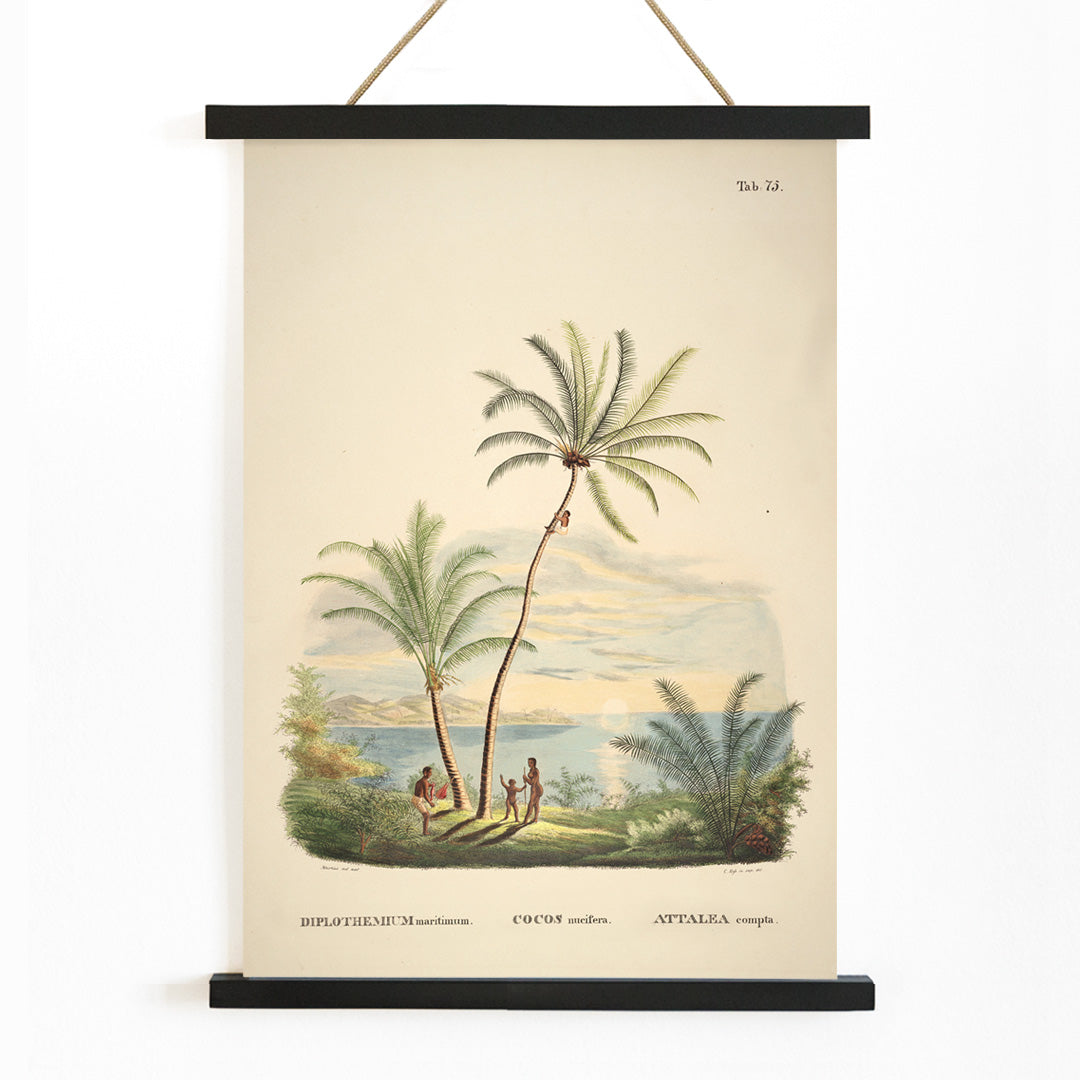
This plate featuring Attalea Compta was produced during a period when European scientific expeditions brought new plant species to light. Such illustrations served as vital records for botanists, enabling accurate identification and comparison of exotic specimens. The artwork reflects the era's fascination with cataloguing the natural world and expanding knowledge through detailed visual documentation.
Palms like Attalea were not only botanical curiosities but also symbols of tropical abundance and exploration. This print stands as a testament to the spirit of discovery and the collaborative efforts between explorers, artists, and scientists. For those interested in botanical or science collections, it represents a bridge between scientific inquiry and artistic tradition.
Style & Characteristics
The composition centers on a stately Attalea palm, rendered with precise linework and subtle shading. Smaller botanical studies—such as seeds and leaf details—are arranged around the main subject, offering a comprehensive view typical of early nineteenth-century botanical illustration.
The color palette features natural greens for the palm, set against a warm beige background, with gentle blue tones suggesting sky and distance. The overall effect is calm and contemplative, inviting viewers to appreciate both the scientific and aesthetic qualities of the specimen.
In Interior Design
This botanical print brings a touch of refined natural history to living rooms, studies, or bedrooms, particularly in spaces that favor organic textures and understated elegance. It pairs beautifully with wood, linen, and neutral-toned furnishings, enhancing both classic and contemporary interiors.
Accentuate the print with green or blue accessories, or display it alongside other pieces from the botanical or science collections for a cohesive, curated look. A slim wood or black frame preserves its archival charm and lends a gallery-quality finish.